

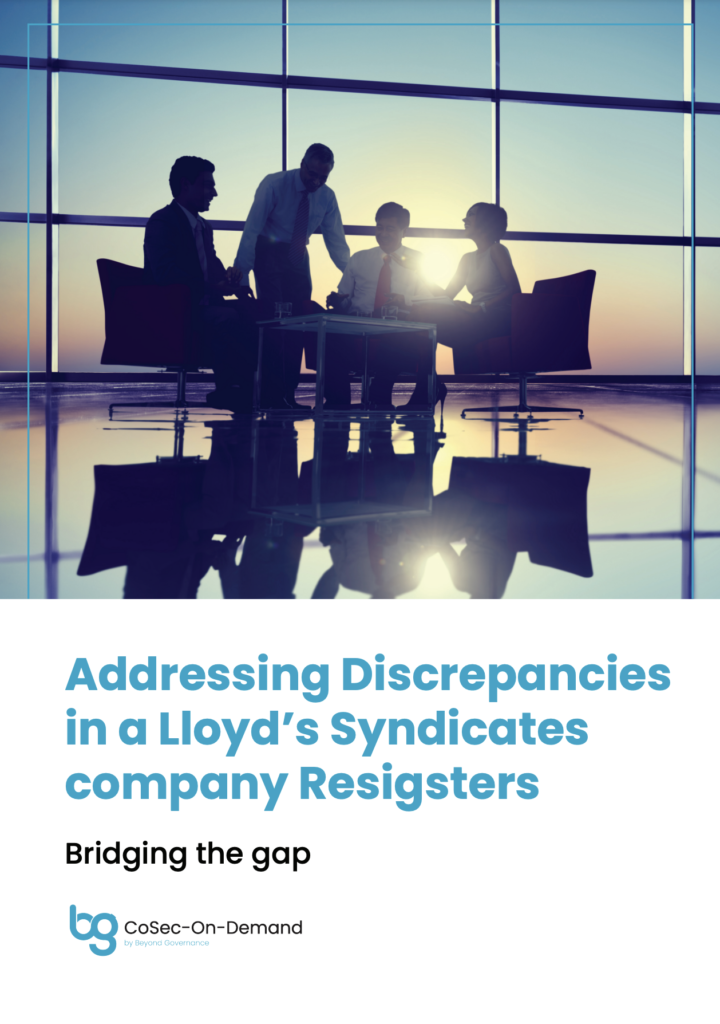
Read how Beyond Governance compared a client’s internal company records with Companies House, identified discrepancies and supported the corrections needed to bring the records into agreement.
Free PDF · 4 pages · Case study
By Beyond Governance
- Follow a practical register reconciliation exercise
- See why share capital records required closer investigation
- Understand how the findings led to corrective action
Download the registers case study
When company records do not agree
Internal records and public filings can give different accounts of the same company. Finding the difference is only the beginning. The governance team then needs to establish the underlying position and determine what needs correcting.
This anonymised case study describes work for a Lloyd’s syndicate client whose company register database needed review. Beyond Governance compared the records with Companies House, investigated discrepancies and prepared the necessary corrections. The case focuses on the work undertaken and the issues identified.
What the case study covers
The starting point
Understand why the client wanted to examine the accuracy of its company records and how the comparison with public filings was approached.
The discrepancies
Read about differences in names and addresses, alongside a share capital discrepancy that required further investigation.
The corrective work
Follow the reconciliation and filing activity described in the case, including the steps taken to correct the records.
Who should read it
Company secretaries, legal teams and governance leads reviewing inherited records, preparing for a records clean-up or investigating differences between internal information and public filings.
A finding beyond names and addresses
The review identified a significant share capital discrepancy as well as errors in names and addresses. It illustrates why reconciling records can require investigation into the underlying company history.
Why download the case study
It gives you a concrete example of the work involved in resolving inconsistent company information. The client is anonymised, allowing the focus to remain on the reconciliation problem and the actions taken.
How to use it
Use the case to frame an internal discussion about where your records are held, how discrepancies are identified and who takes responsibility for resolving them.
Download the company registers case study
See how a review of internal records and public filings led to corrective action.
Button: Download the registers case study
Related resources
Central Oversight of Subsidiary Management
Further support
Explore CoSec on Demand if your team needs additional company secretarial support.